I still remember my first solo visit to Bugis MRT Station. I had planned a day exploring cafés, shops, and streets, but before I could enjoy any of that, I found myself standing on the platform, staring at maps, train schedules, and exits, feeling slightly overwhelmed. It struck me:
Even though the trains move like clockwork, navigating the station itself can feel like a small adventure especially if it’s your first time.
Bugis MRT isn’t just where trains arrive and depart. It’s the lifeline beneath the streets, quietly linking offices, shopping centres, historic shophouses, places of worship, homes, cafés, and people from every walk of life. Every escalator, corridor, and transfer link has its rhythm, and every trip teaches you a little more about the heartbeat of Bugis.
Standing there, I realized: if even someone like me, who visits Bugis often, can feel slightly lost navigating the station, then many others probably do too. That’s why I’ve written this complete Bugis MRT guide to help you understand station layouts, exits, transfers, train timings, nearby transport, and everything else you need for a smooth, stress-free journey through one of Singapore’s busiest MRT interchanges.
Bugis MRT Station (EW12/DT14) is a major underground interchange connecting:
East–West Line (EWL)
Downtown Line (DTL)
The two lines were built decades apart, which gives the station its unique personality: the older EWL platforms rest at Basement 2, while the newer DTL platforms lie deep below at Basement 5, linked elegantly by transfer corridors, escalators, and travelators. Walking through these passageways, you can’t help but notice the layers of Bugis above you streets humming with life, morning coffee aromas wafting through alleyways, and the occasional glimpse of color from a shophouse façade all quietly resting on this underground network of movement.
Despite its technical complexity, the station feels surprisingly intuitive. Every sign, escalator, and concourse seems thoughtfully placed, almost as if the station itself is guiding commuters gently through the rhythm of the city. Thousands of people pass through each hour, yet the flow rarely feels chaotic; it’s as if the station understands the pulse of Bugis and moves in harmony with it.
First & Last Train Timings The Daily Rhythm of Bugis
Every visit to Bugis MRT begins with a rhythm that most people barely notice the cadence of the first and last trains. Arriving early in the morning, the station feels hushed, bathed in soft golden light that filters through the underground concourses. The air smells faintly of polished floors and freshly printed timetables, and the occasional beep of a faregate feels like the station’s gentle heartbeat, waking the neighborhood slowly.
East–West Line (EW12) Bugis
Destination
First Train (Weekdays & Sat)
First Train (Sun & PH)
Last Train
EW1 Pasir Ris
6:03 AM
6:31 AM
12:13 AM
EW33 Tuas Link
5:56 AM
6:22 AM
11:53 PM
Changi Airport (CG2)
–
–
11:29 PM
Downtown Line (DT14) Bugis
Destination
First Train (Weekdays & Sat)
First Train (Sun & PH)
Last Train
DT1–BP6 Bukit Panjang
6:03 AM
6:32 AM
12:22 AM
DT35 Expo
5:57 AM
6:17 AM
12:01 AM
These schedules do more than move people; they quietly shape the soul of Bugis. Early risers watch the city slowly come alive, streets filling with vendors, commuters, and the aroma of morning coffee. During the day, trains shuttle passengers with a steady hum, connecting offices, schools, cafés, and shops. And late at night, when the last trains depart, the station itself seems to exhale, leaving behind a calm, reflective silence that mirrors the quiet streets above.
Station Layout A City Beneath the City
Bugis MRT is more than a transit hub; it’s a vertical world where every level tells a story, guiding thousands of commuters and visitors through the heartbeat of Bugis. Each floor, concourse, and platform carries its own rhythm, from the busy streets above to the quiet depths below.
Level
Description
L1
Street level, bus stops, taxi stands, pick-up & drop-off
Walking through Bugis MRT is like exploring a city within a city. From the vibrant L1 streets to the quiet, deep DTL platforms, each level provides not only transit but a unique sensory experience. Retail shops, faregates, and transfer corridors are designed for both convenience and flow, while commuters, shoppers, tourists, and locals move through with an almost musical rhythm, reflecting the heartbeat of Bugis itself.
Platforms Four Tracks of Movement
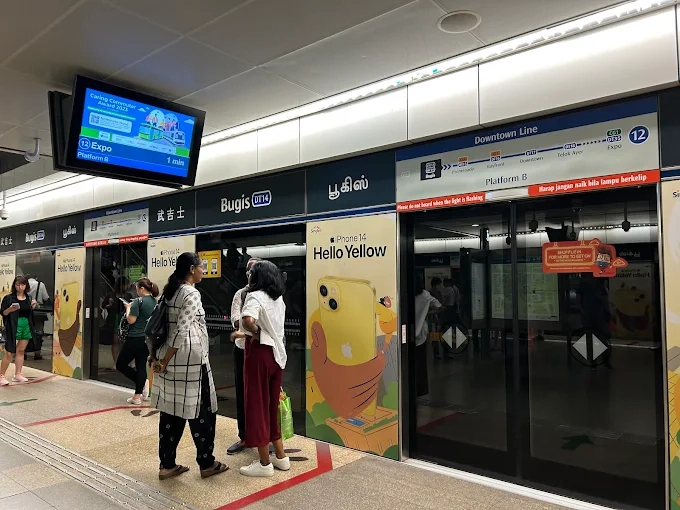
Bugis MRT has four main platforms, each with its own rhythm and energy, reflecting the pulse of the neighborhood above.
East–West Line (B2)
Platform A → Pasir Ris (via Lavender): Morning commuters, students, and office-goers all converge here, bringing a constant buzz of movement.
Platform B → Tuas Link (via City Hall): Evening traffic flows in the opposite direction, a steady stream of people returning home, finishing errands, or heading out for dinner in Bugis.
Downtown Line (B5)
Platform A → Bukit Panjang (via Rochor): Deep underground, the atmosphere feels calm yet purposeful, perfect for those focused on their day ahead.
Platform B → Expo (via Promenade): Passengers drift in a mix of tourists and locals, each carrying stories, plans, and curiosity about the city.
Each platform tells its own story: the rush of commuters, the quiet moments of reflection, and the small pauses when someone simply watches life unfold through the station walls. Bugis MRT isn’t just about getting from point A to B; it’s about being part of the layered energy of the city, even for a few minutes.
Concourse & Transfer Links Where Paths Cross
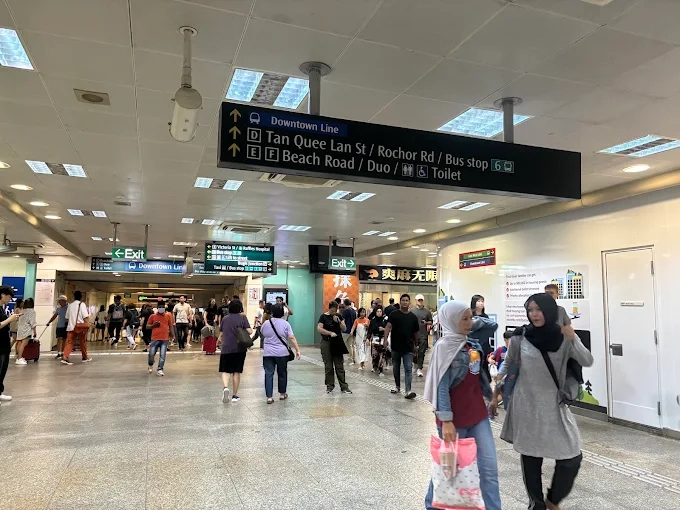
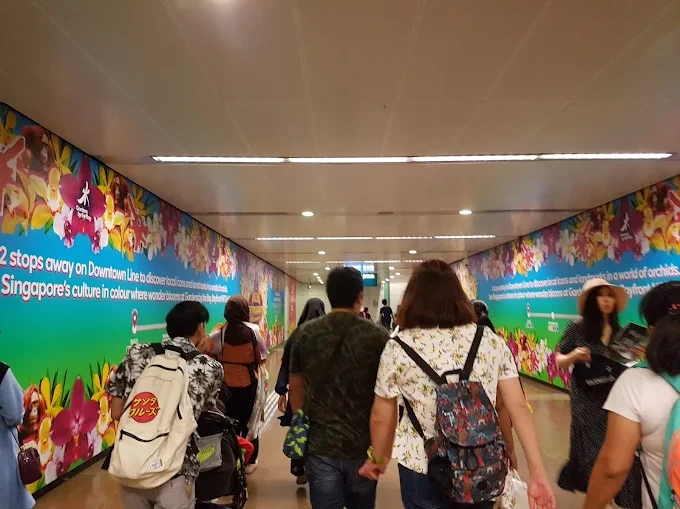
Walking through Bugis MRT’s concourses feels like stepping into an underground city of its own. Both the East–West Line and Downtown Line concourses are connected by paid and unpaid transfer links, making it seamless to switch lines without confusion. The unpaid linkway, softly lit and lined with retail shops, often feels like a quiet secret street beneath the city a place where your pace can slow, even as Bugis above buzzes with energy.
The paid transfer linkway, equipped with escalators and travelators, ensures that moving between Basement 2 and Basement 5 is smooth and intuitive. Commuters flow naturally from one line to another, and you can’t help but notice how the station’s design subtly guides thousands of people every hour, almost like a choreography orchestrated by the city itself.
Art in Transit “Ephemeral” by Patrick Chia
Nestled along the B3 transfer linkway, Patrick Chia’s “Ephemeral” is the kind of artwork that quietly waits for your attention. Some days, it captures your gaze fully, inviting reflection. Other days, it drifts into your peripheral vision, gently shaping the mood without demanding it.
Its beauty lies in its subtlety much like Bugis itself. The artwork stretches along the station, offering different impressions with each visit. It’s a reminder that even in transit, even while moving from platform to platform, there are moments to pause, notice, and let the city speak to you in its own understated way.
Station Amenities Small Details, Big Comfort
Bugis MRT isn’t just about moving people efficiently; it’s built for comfort, accessibility, and convenience. Wheelchair-accessible toilets and lifts make it easy for everyone to navigate the station. Retail shops and ATMs add small but essential conveniences for commuters, while bicycle racks and SimplyGo ticket offices make daily travel easier for locals and visitors alike.
Self-service machines and clear signage ensure that even first-time visitors can move through the station with confidence. Every detail, from lighting to seating to accessibility features, reflects the idea that a station isn’t just a stop, it’s a part of the city’s rhythm, a place where every commuter, tourist, or passerby can feel cared for.
Exits Exploring Bugis, One Step at a Time
Stepping out of Bugis MRT is like opening a set of doors into different stories of the city. Each exit guides you to unique corners of Bugis, some bustling with shopping and cafés, others filled with heritage, temples, and quiet streets. Certain exits are barrier-free, making them easier for passengers with mobility needs, while others connect directly to malls or office towers.
Exit C, for instance, provides both street-level access via escalators and a direct underground link to Basement 1 of Bugis Junction, open daily from 6 AM to midnight. Exits G and H reflect Bugis’ evolving cityscape, with new connections to Guoco Midtown and Bugis Junction Towers, giving commuters and explorers fresh ways to move through the district. Choosing your exit is not just a matter of convenience; it’s about deciding the story you want to step into that day shopping, heritage, dining, or a quiet corner of Bugis.
Exit
Location
Nearby Landmarks / Attractions
Accessibility / Notes
A
Victoria Street (Northbound)
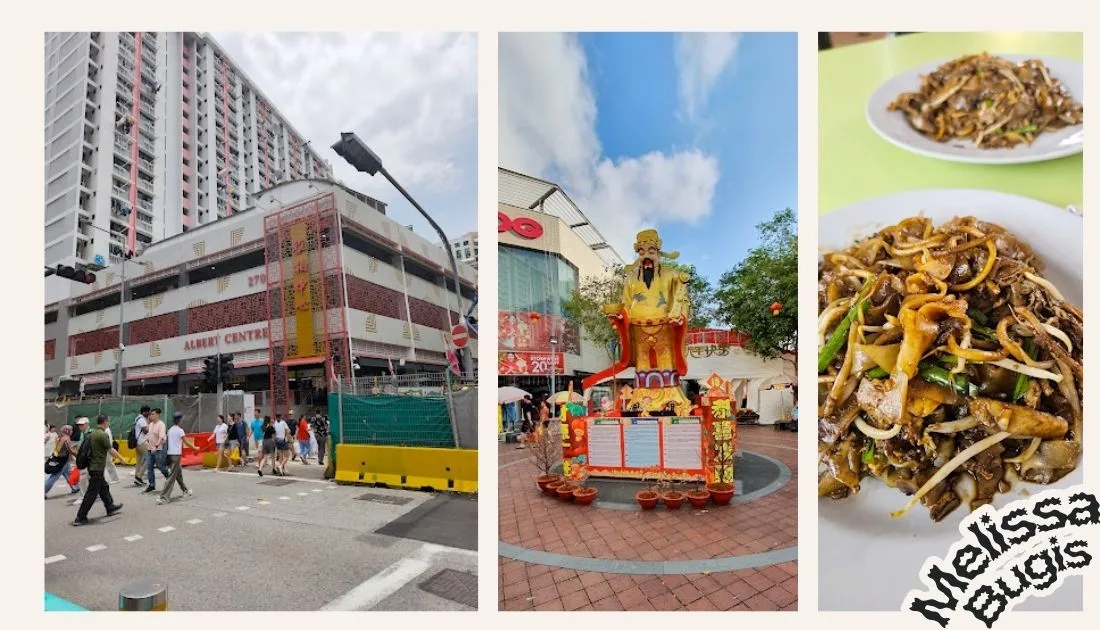
Queen Street Bus Terminal, Albert Centre Market & Food Centre, Bugis Street, Church of Our Lady Lordes, Fu Lu Shou Complex, OG Albert Complex, Rochor Road, Stamford Primary School, The Bencoolen For step-by-step directions and nearby places, check the Bugis Stn Exit A guide.
Not barrier-free
B
Victoria Street (Southbound)
Istana Kampong Glam, Malay Heritage Centre, Masjid Sultan, Parkview Square, Raffles Hospital, Raffles Specialist Centre, Rochor Road, The Gateway, The Golden Landmark, Village Hotel Bugis If you want the full walking routes and nearby spots,readthe Bugis MRT Exit B map guide.
Barrier-free
C
Bugis Junction (Level 1 / Basement 1)
Albert Centre Market & Food Centre, Bernhard Schulte House, BOC Plaza, Bugis Cube, Bugis Junction Towers, Bugis Point, Bugis Street, Bugis+, Bulkhaul House, Bylands Building, Chan Brother Building, Fortune Centre, Fu Lu Shou Complex, GSM Building, ibis Singapore on Bencoolen, ICE Enterprise House, InterContinental Singapore, Kwan Im Thong Hood Cho Temple, Mecure Singapore Bugis, Midland House, Milieu at Middle Road, National Design Centre, National Library, OG Albert Complex, Parkroyal on Beach Road, Rochor Road, Saint Joseph’s Church, Sri Krishnan Temple, Stamford Arts Centre, The Bencoolen, Victoria Street, Wisma Alsagoff
Escalators to street level and direct link to Bugis Junction, open 6 AM – 12 AM; not fully barrier-free
D
Tan Quee Lan Street
Bugis Cube, Bugis Point, Bulkhaul House, Chan Brother Building, Milieu at Middle Road, North Bridge Road, Shaw Towers, Wisma Alsagoff To see where this route leads and what attractions are nearby, explore the Bugis MRT Exit D directions guide.
Barrier-free
E
Duo (Basement 1)
Andaz Singapore, Duo (Galleria & Tower), Fraser Street, Istana Kampong Glam, Malay Heritage Centre, Masjid Sultan, North Bridge Road, Parkroyal on Beach Road, Parkview Square, Rochor Road, The Gateway For detailed directions and places you can reach from here, see the Bugis MRT Exit E route guide.
Barrier-free
F
Duo (Basement 2)
Andaz Singapore, Duo (Galleria & Tower)
Barrier-free
G
Guoco Midtown (Basement 1)
Guoco Midtown, Guoco Midtown II
Barrier-free, opened 1 Nov 2025
H
Bugis Junction Towers
Bugis Junction, Bugis Junction Towers
Under construction
Passenger Usage Patterns The Quiet Pulse of Bugis
Bugis MRT Station is more than just a transit hub; it’s a living snapshot of the neighborhood, moving and breathing with the city’s rhythm. Every hour of the day brings a new story, a new mood, and a subtle shift in energy that mirrors life above ground.
Morning (7–9 AM) The station hums with the focused energy of office workers heading toward City Hall, Raffles Place, and Expo. Students shuffle in from nearby schools, backpacks slung over their shoulders, eyes half-awake, minds wandering between homework and morning dreams. The platform is a delicate choreography of purposeful footsteps and fleeting glances.
Midday (11 AM–3 PM) Tourists drift through, cameras in hand, backpacks filled with purchases from Bugis Street and Bugis+, pausing to admire murals or peek into small cafés tucked along the underground concourses. Families wander more slowly, discovering every nook and hidden alley aboveground while the station quietly absorbs the ebb and flow of curious travelers.
Evening (5–8 PM) Life swells again as mall staff, office workers, and shoppers converge. Conversations overlap with footsteps, the echo of escalators, and the distant hum of trains. Bugis MRT becomes a microcosm of the city, a space where locals, workers, and visitors briefly share the same rhythm.
Late Night (after 9 PM) The station softens. Footsteps become measured, voices hushed. The constant energy of the day gives way to a quieter, reflective atmosphere. Bugis itself seems to exhale, and those still waiting on platforms can almost feel the calm settling into the city above.
Bugis MRT doesn’t just move people, it reveals the heartbeat of the neighborhood, hour by hour, train by train.
Transport Connections Where All Roads Meet
Bugis is one of the few places in Singapore where every form of transport buses, taxis, cars, and even temporary MRT services converge gracefully, making it effortless for commuters, shoppers, and explorers to move through the district.
Bus Connections
Major bus stops surround the station along Victoria Street, Rochor Road, and North Bridge Road, providing links to almost every corner of Singapore. From here, buses fan out toward:
Orchard Road – for shopping and leisure
Marina Bay – for work or sightseeing
Little India – for culture and cuisine
Bedok & Changi – connecting to residential and airport zones
The rhythm of buses complements the MRT, creating a seamless pulse that guides passengers through Bugis’ streets above.
Taxi & Ride-Hailing
Taxi stands and ride-hailing pick-up points are conveniently located at:
Bugis Junction
National Library Building
Bugis+ Mall
No matter the hour, whether early morning or late night, there’s always a way to reach your next destination.
Road Access
For drivers, Bugis is easily reachable via major arteries:
Nicoll Highway – connecting to the east and central areas
Rochor Road – weaving through the heart of Bugis
Victoria Street & North Bridge Road – leading into the cultural and commercial hubs
These routes ensure smooth access for work, shopping, or casual exploration of the district.
Tip: If you’re planning to drive instead of taking the train, don’t miss my complete guide on Bugis parking options to avoid stress and save time.
MRT Bus Bridging Service
During service disruptions, MRT bridging buses kick in seamlessly, covering affected stretches of the East West Line (EWL) and Downtown Line (DTL). These buses operate from key exits around Bugis, keeping commuters moving without interruption. Even when maintenance closes parts of the network, the neighborhood remains alive and accessible, a testament to how well Bugis is woven into Singapore’s transport fabric.
People Also Asked
1. Where is Bugis MRT Station located?
Bugis MRT Station is located at the heart of the Bugis district, directly connected to Bugis Junction and within walking distance of Bugis+, Bugis Street Market, Kampong Glam, and the National Library.
2. Which MRT lines serve Bugis MRT Station?
Bugis MRT is an interchange station serving the East–West Line (Green Line) and the Downtown Line (Blue Line), making it one of the most important transport hubs in central Singapore.
3. What are the first and last train timings at Bugis MRT?
First trains usually start around 5:30 AM, while last trains depart close to 12:00 midnight, with slight variations depending on direction and line.
4. How do I get to Bugis Junction from Bugis MRT?
You can walk directly into Bugis Junction Mall from the station via underground concourse exits — no need to cross any roads.
5. Is Bugis MRT convenient for tourists?
Yes. Bugis MRT is one of the best MRT stations for tourists due to its direct access to shopping, street markets, cafés, hotels, and cultural attractions.
6. Are there bus connections at Bugis MRT?
Multiple bus routes stop around Bugis MRT along Victoria Street, Rochor Road, and North Bridge Road, connecting to Orchard, Marina Bay, Little India, and beyond.
7. Why is Bugis MRT considered a major transport hub?
Because it links two main MRT lines, connects to major malls and cultural districts, and serves thousands of commuters and tourists every day.
Why Bugis MRT Feels Different
Some MRT stations are purely functional, a place to get on and off a train, a transit point with no story. Some are architecturally striking, leaving an impression through design or art. But Bugis MRT is something entirely different. It doesn’t just exist; it lives. It breathes with the rhythm of the city above, carrying a pulse that you can feel if you pause and notice.
Every trip through Bugis carries fragments of life:
The morning hopes of office workers, clutching their briefcases and coffee cups, minds already buzzing with the day’s tasks.
The laughter of tourists, dragging shopping bags, photographing everything from intricate murals to the station’s quiet corners.
The fatigue of retail staff, moving swiftly yet wearily, having spent hours on their feet in nearby malls and shops.
The quiet thoughts of night travelers, those returning from dinners, late shifts, or long walks through the streets of Kampong Glam, reflecting on the day’s small adventures.
Each platform, each escalator, each linkway tells its own story. The East–West Line platforms hum with routine, commuters moving in familiar patterns. Deep below, the Downtown Line platforms carry a different energy: quieter, slower, almost meditative, yet still alive with movement. Even the unpaid linkways and retail-lined concourses create subtle encounters: a brief conversation with a stranger, the smell of a pastry from a shop, or the soft echo of footsteps.
This isn’t just transport. This is a connection.
Connection to a city that moves, a neighborhood that grows, and a pulse that never stops Bugis, alive and flowing through every train, every passenger, and every moment spent in its underground arteries.